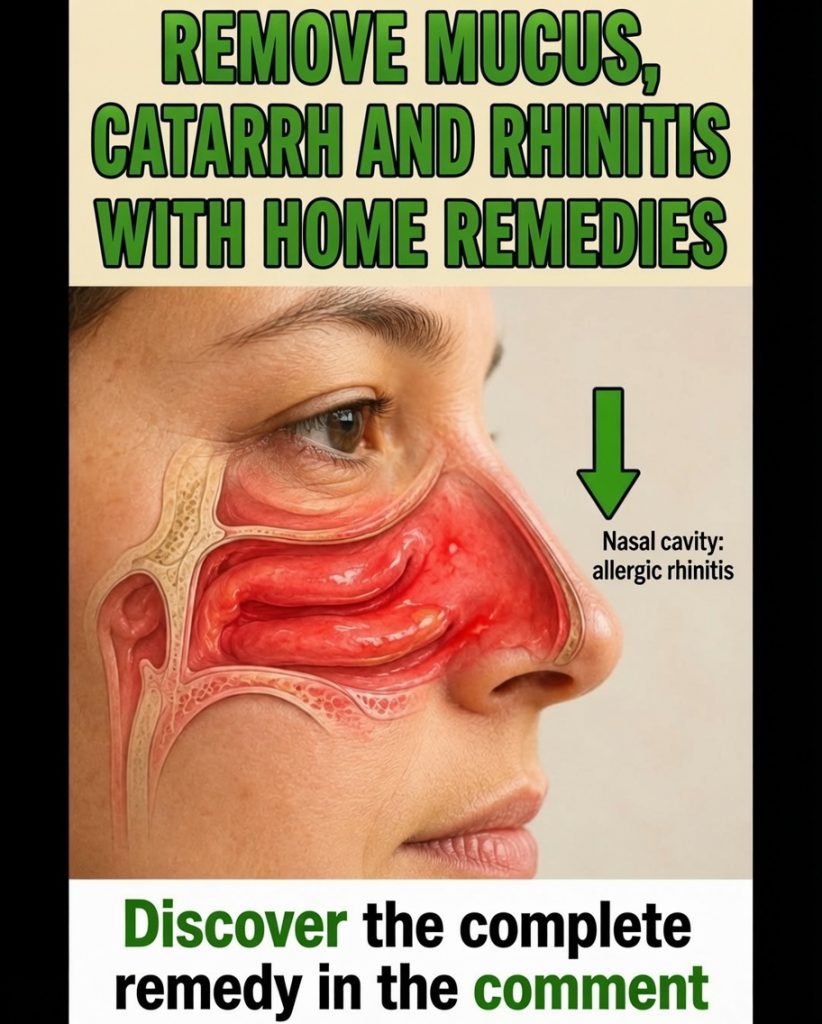
🌿 Natural Home Remedies for Mucus and Phlegm: Simple Ways to Support Clearer Breathing
Excess mucus and phlegm can be uncomfortable, especially when associated with colds, allergies, sinus congestion, or seasonal respiratory irritation. A buildup of mucus may contribute to throat discomfort, coughing, nasal congestion, and a feeling of pressure around the sinuses.
Fortunately, several traditional home remedies may help loosen secretions, promote comfort, and support easier breathing. In this guide, you’ll discover four simple and natural approaches that many people use to help manage excess mucus and phlegm.
🌬️ 1. Eucalyptus Steam Inhalation
Steam inhalation is a popular home remedy for temporary relief from nasal congestion. The warm moisture may help loosen mucus, while the refreshing aroma of eucalyptus can create a sensation of clearer airways.
How to Prepare
Ingredients:
- 1 liter (4 cups) water
- A handful of fresh eucalyptus leaves or a few drops of eucalyptus oil
Instructions
- Bring the water to a boil.
- Remove from heat and add the eucalyptus.
- Place the container on a stable surface.
- Carefully lean over the bowl.
- Cover your head with a towel to trap the steam.
- Inhale gently for 10–15 minutes.
Potential Benefits
✔ Helps moisten dry airways
✔ May loosen thick mucus
✔ Provides a soothing breathing experience
✔ Supports temporary relief from congestion
Tip: Use caution to avoid burns from hot steam.
🧂 2. Warm Salt Water Gargle
A saltwater gargle is one of the simplest home remedies for throat discomfort and excess mucus.
How to Prepare
Ingredients:
- 1 cup warm water
- 1 teaspoon salt
Instructions
- Dissolve the salt completely in warm water.
- Gargle for 30 seconds.
- Spit out the solution.
- Repeat 2–3 times daily as needed.
Potential Benefits
✔ Helps cleanse the throat
✔ May soothe irritation
✔ Supports mucus clearance
✔ Easy and inexpensive to prepare
Many people find this remedy especially helpful in the morning or before bedtime.
🍯 3. Ginger and Honey Tea
Ginger and honey have been used in traditional wellness practices for centuries. This warming beverage may help provide comfort during periods of congestion or throat irritation.
Ingredients
- 4 cm (about 1.5 inches) fresh ginger root
- 1 cup water
- 1 tablespoon honey
Instructions
- Peel and slice the ginger.
- Bring the water to a boil.
- Add the ginger and simmer for 10 minutes.
- Strain into a cup.
- Stir in the honey.
- Enjoy while warm.
Potential Benefits
✔ Provides warmth and hydration
✔ May help soothe the throat
✔ Contains naturally occurring antioxidants
✔ Supports overall respiratory comfort
For best results, many people enjoy this tea once or twice daily.
🌼 4. Chamomile Steam Therapy
Chamomile is widely appreciated for its calming properties and pleasant aroma. When used as a steam inhalation, it may provide comfort during periods of sinus congestion.
Ingredients
- 1 liter water
- 2–3 chamomile tea bags or a handful of dried chamomile flowers
Instructions
- Boil the water.
- Add the chamomile.
- Remove from heat.
- Lean over the container and carefully inhale the steam.
- Continue for approximately 10 minutes.
Potential Benefits
✔ Creates a soothing steam experience
✔ May help ease feelings of nasal congestion
✔ Promotes relaxation
✔ Supports respiratory comfort
Repeat up to twice daily if desired.
💧 Additional Tips to Help Manage Excess Mucus
Along with these natural remedies, healthy daily habits may help support respiratory wellness.
Stay Hydrated
Drinking enough water throughout the day may help keep mucus thinner and easier to clear.
Avoid Irritants
Try to limit exposure to:
- Cigarette smoke
- Air pollution
- Strong chemical fumes
Get Adequate Rest
Quality sleep supports the body’s natural recovery processes.
Monitor Trigger Foods
Some individuals notice increased mucus production after consuming certain foods. Pay attention to your body’s response and discuss concerns with a healthcare professional if needed.
Use a Humidifier
Adding moisture to indoor air may help reduce dryness and support comfort during colder months.
⚠️ When to Seek Medical Attention
Home remedies may provide temporary relief, but medical evaluation is important if symptoms become severe or persistent.
Consult a healthcare professional if you experience:
- Symptoms lasting longer than one week
- High fever
- Difficulty breathing
- Chest pain
- Wheezing
- Blood in mucus
- Severe sinus pain
These symptoms may indicate an underlying condition that requires professional treatment.
🌟 Final Thoughts
Excess mucus and phlegm can be frustrating, but simple home remedies such as eucalyptus steam, saltwater gargles, ginger tea, and chamomile inhalation may help provide comfort and support easier breathing.
Combined with good hydration, adequate rest, and healthy lifestyle habits, these natural approaches can be useful additions to your wellness routine. However, they should not replace medical advice or treatment when symptoms are severe or ongoing.
By listening to your body and taking proactive steps to support respiratory health, you can help maintain greater comfort and breathe more easily throughout the year.
Frequently Asked Questions
Can home remedies completely eliminate mucus?
Home remedies may help loosen mucus and improve comfort, but effectiveness varies depending on the underlying cause.
How often can I use steam inhalation?
Many people use steam inhalation once or twice daily. Avoid excessive exposure and use caution around hot water.
Is honey suitable for everyone?
Honey should not be given to children under one year of age.
When should I see a doctor?
Seek medical advice if symptoms are severe, worsen, or persist for more than a week.
Disclaimer
This article is intended for informational purposes only and does not constitute medical advice. Always consult a qualified healthcare professional regarding persistent respiratory symptoms, underlying health conditions, or concerns about your health.